

What is Vibration Control?
Basics of Vibration Control Dampers
One of the technologies used to protect buildings from earthquakes is vibration control.
Vibration control dampers absorb shaking and enhance the safety of structures.
These dampers, integrated into building frameworks, control vibrations caused by earthquakes and wind.
This technology improves the safety of offices and residential buildings while providing comfortable living environments.
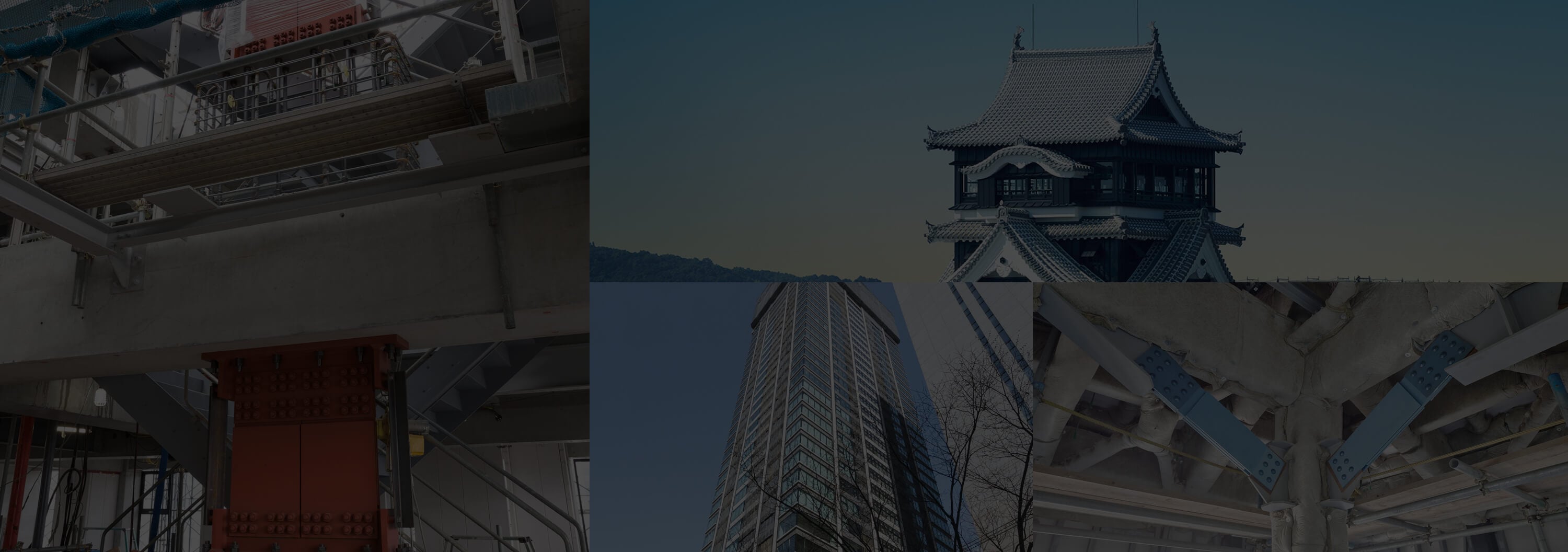

Types and features of earthquake countermeasures
There are three types of earthquake countermeasures: seismic-resistant structures that withstand vibrations, base-isolated structures that block the transmission of vibrations, and vibration control structures that absorb vibrations.
Since each has different costs and effects, it is important to choose the structure suitable for the building.

Vibration control dampers can enhance the seismic performance of buildings.
Role of vibration control devices
Vibration control dampers integrated into buildings primarily reduce shaking by absorbing vibration energy. Sumitomo Rubber's dampers, made with high-damping rubber, efficiently absorb vibrations caused by earthquakes and wind, and feature excellent durability for repeated use.* These dampers are employed in a variety of structures such as office buildings, condominiums, and detached houses, and can also be applied to other types of structures.
*Based on the results of repeated cycle tests conducted in August 2016 at Sumitomo Rubber Industries’ Kakogawa Plant using full-scale products.
Points to note when designing vibration-controlled buildings
Regarding the participation ratio of vibration control devices
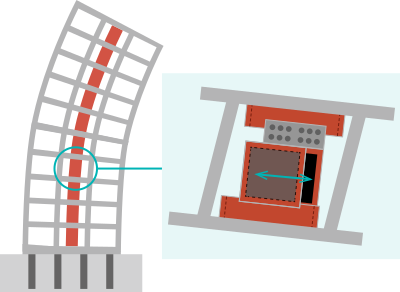
In the design of vibration-controlled buildings, it is important to understand the extent to which the vibration control devices deform when the building itself deforms. When considering the deformation of these devices, it is necessary to take into account the influence of the building’s bending deformation as well as deformation of the supporting members for the vibration dampers.
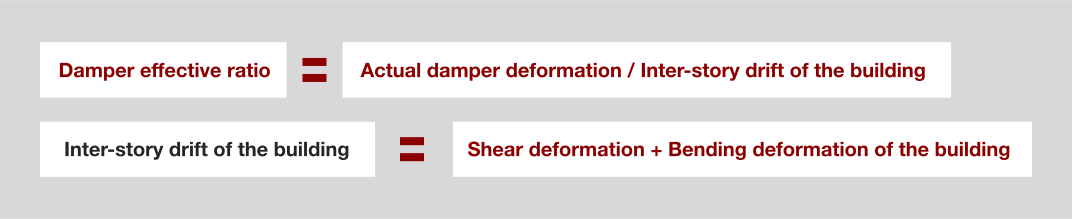
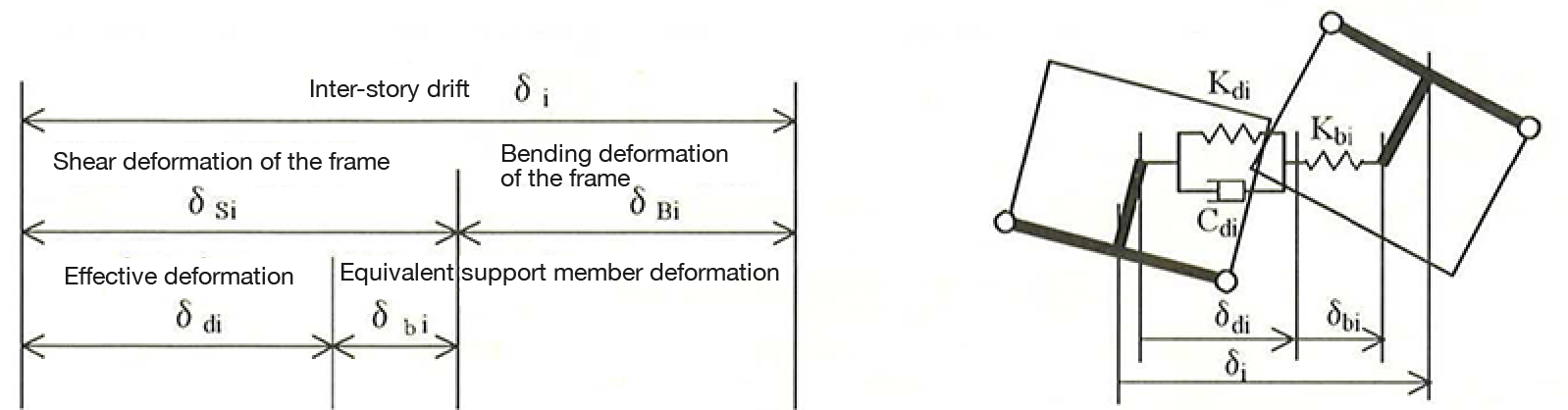
- Factors reducing the effective participation ratio of dampers
- Building bending deformation
Mainly caused by axial elongation and contraction of columns. This effect becomes larger in buildings with higher aspect ratios. - Deformation of damper-adjacent members
Includes deformation of connection members, surrounding framing members, elongation/contraction of brace members, and bending of intermediate columns and large beams.